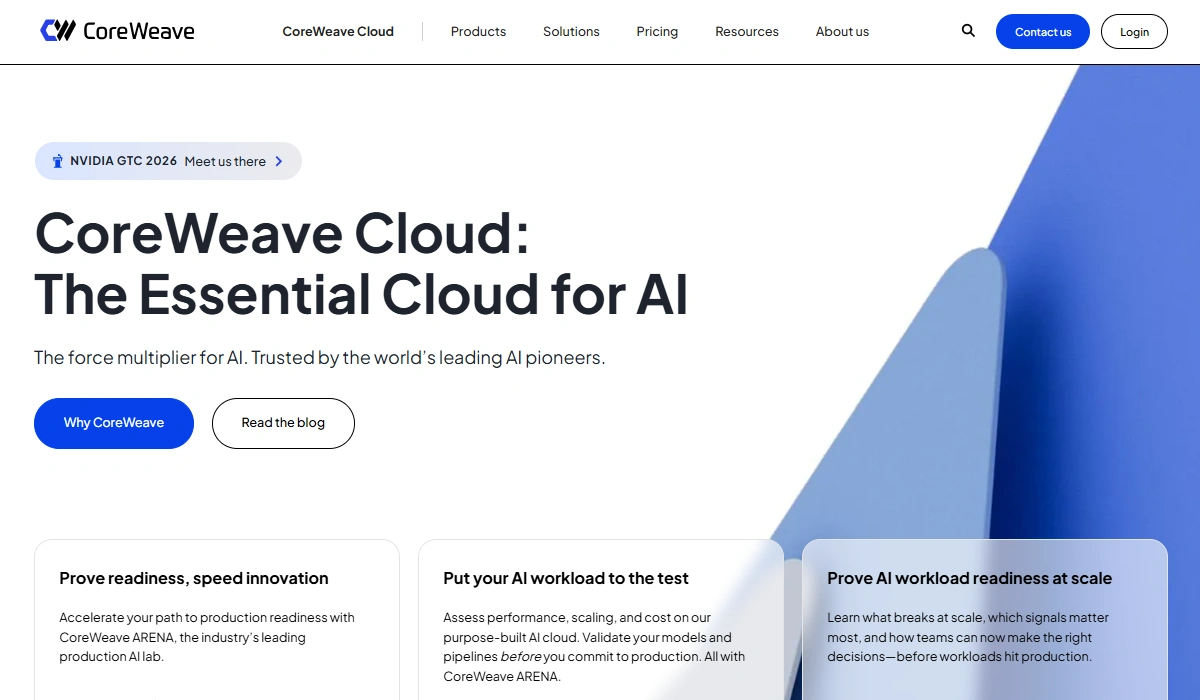
Most teams that go looking for a CoreWeave alternative want to rent a single GPU, not eight, and they want to do it today without a sales call. CoreWeave sells strong hardware, but its standard HGX instances come in 8-GPU blocks, access runs through sales, and the bill splits across separate GPU, CPU, RAM, and storage line items.
Coreweave's structure fits large-scale enterprise training. But it is a harder sell for a solo developer, a research group, or a startup running bursty jobs. The GPU cloud market has matured, and self-serve providers now rent a single card by the minute with no contract.
This guide compares seven of the best CoreWeave alternatives for 2026 on single-GPU access, published pricing, billing, and commitment.
Takeaways
- Single-GPU access is the top reason teams leave CoreWeave, which sells H100s only in 8-GPU nodes.
- Thunder Compute has the lowest fixed on-demand A100 rate in this guide at $1.09/hr.
- Self-serve H100 rates cluster between $3.20/hr and $3.95/hr across the specialists.
- CoreWeave normalizes to about $6.16/GPU-hr for an H100, before separate CPU, RAM, and storage charges.
Why Teams Look For Alternatives To CoreWeave
The most common reason to leave or avoid Coreweave is the minimum purchase. CoreWeave's HGX H100 and HGX A100 instances are priced and provisioned in 8-GPU blocks, with a single-GPU GH200 instance as the main exception. A workload that fits on one or two cards pays for a lot of unused compute.
The second reason is the buying process. There is no self-serve signup for the main HGX range, so getting started means a sales conversation rather than a console and a credit card. A team that wants to test an idea this afternoon feels that friction immediately.
The third reason is billing shape. CoreWeave prices the GPU, CPU, RAM, and storage as separate components, so the headline per-GPU number is not the number you pay. Its best rates are gated behind multi-year reserved contracts.
Top Alternatives To CoreWeave At A Glance
The table below compares seven self-serve alternatives against CoreWeave on key factors. Prices are per GPU, normalized to a single card even for multi GPU clusters.
| Provider | Single GPU? | H100 $/GPU-hr | A100 80GB $/GPU-hr | Billing | Min. Commitment |
|---|---|---|---|---|---|
| Thunder Compute | Yes | $3.20 | $1.09 | Per minute | None |
| RunPod | Yes | $3.49 | $1.59 | Per second | None |
| Lambda | Yes | $3.29 | $2.791 | Per hour | None on-demand |
| Vast.ai | Yes | From $4.142 | From $0.952 | Per second | None |
| Nebius | Yes | $3.85 | Not offered | Per hour | None |
| Crusoe | Yes | $3.90 | $2.00 | Per minute | None on-demand |
| Modal | Yes (serverless) | $3.95 | $2.50 | Per second, scale to zero | None |
| CoreWeave | No (8-GPU HGX) | $6.163 | $2.703 | Hourly, per component | Contract for best rates |
| 1 Lambda's A100 80GB is sold in 8-GPU nodes at $2.79/GPU-hr. H100 PCIe is available as a single GPU. 2Vast.ai is a marketplace; figures are the lowest available single-GPU listings and vary by host, region, and demand. 3CoreWeave HGX instances are priced per 8-GPU node and normalized to a per-GPU figure.On-demand single-GPU rates from each provider as of September 17, 2026; |
|||||
The 7 Best CoreWeave Alternatives For 2026
Thunder Compute
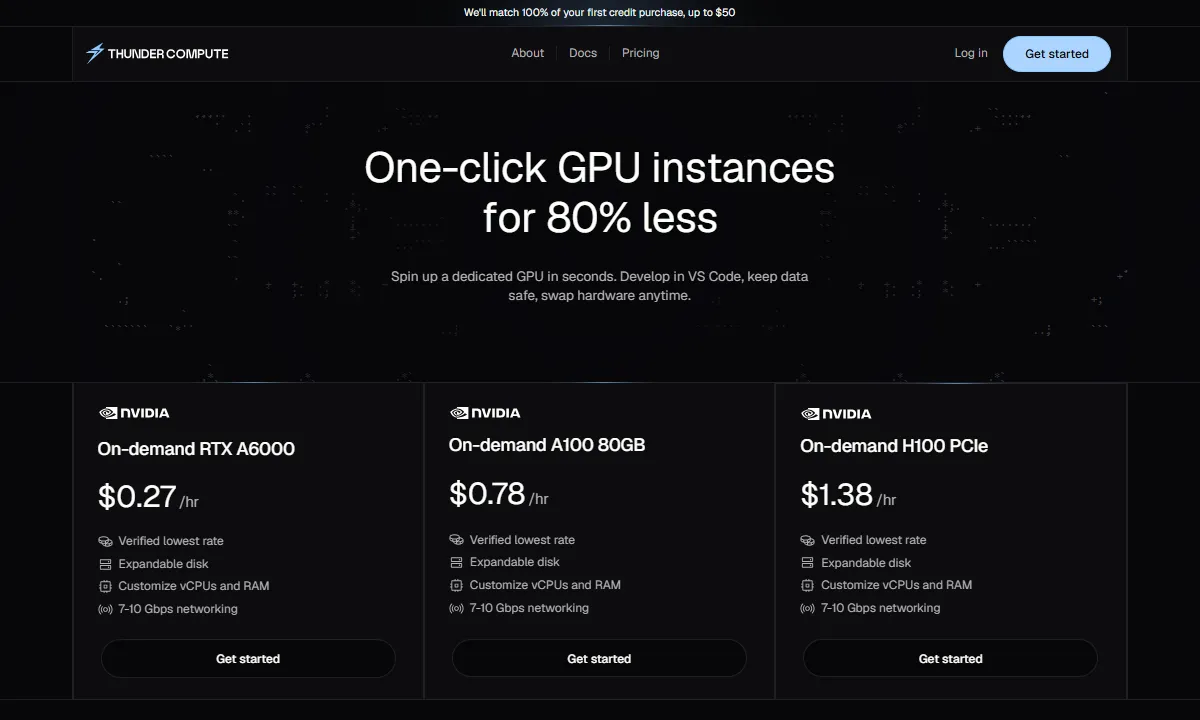
Thunder Compute has the lowest fixed on-demand A100 rate in this comparison and rents a single GPU by the minute, the most direct answer to CoreWeave's 8-GPU unit. A100 80GB instances are $1.09/hr and H100 PCIe instances are $3.20/hr, both billed by the minute with no commitment and persistent storage included. An instance launches from a console or your editor and is live in about 30 seconds with no quota approval.
Thunder Compute is built for developers rather than procurement teams. It supports 1-8 GPUs per instance, integrates with VS Code and Cursor, and ships one-click templates for local LLMs and image generation. It fits fine-tuning, small to mid-size inference, and development work where per-minute billing matters more than a rack-scale cluster.
RunPod
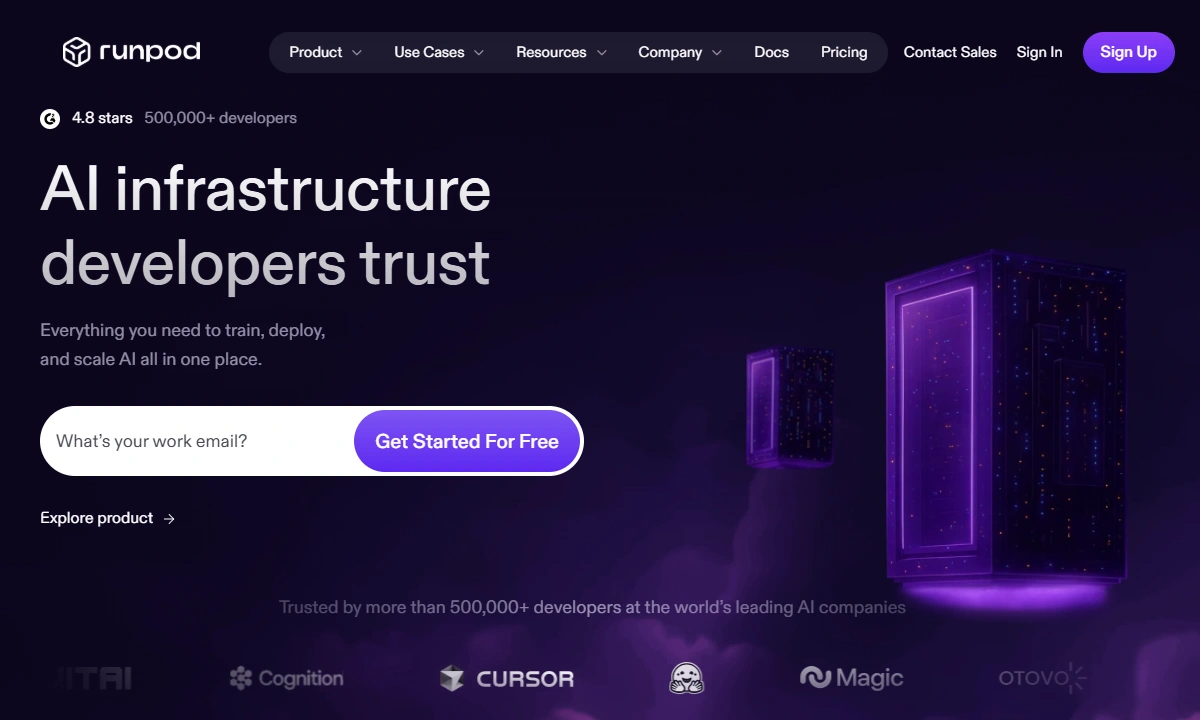
RunPod is the broadest self-serve alternative, covering development pods, serverless inference, and multi-node clusters under one account. An on-demand H100 is $3.49/hr and an A100 80GB is $1.59/hr on Runpod's Secure Cloud. Billing is per second with no charge during provisioning.
RunPod's Community Cloud has lower rates but runs on third-party hardware. RunPod fits developers who want to start on one card and still reach serverless endpoints or larger clusters without switching vendors.
Lambda
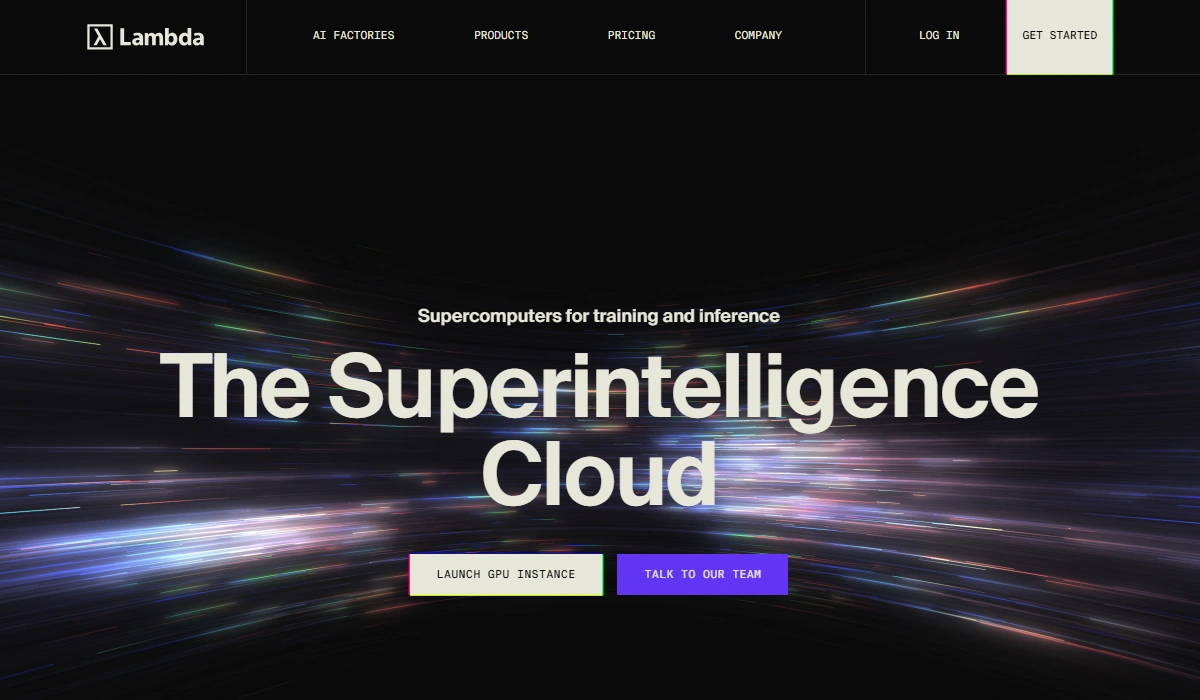
Lambda is an established provider aimed at research teams, offering on-demand instances and one-click clusters. On-demand H100 PCIe is $3.29/hr, while the A100 80GB sells in 8-GPU nodes at $2.79/GPU-hr and a single A100 40GB is $1.99/hr. Prices exclude tax, worth noting against tax-inclusive quotes elsewhere.
Lambda suits teams that want reliable, dedicated hardware and the option to scale into managed clusters from one vendor.
Vast.ai
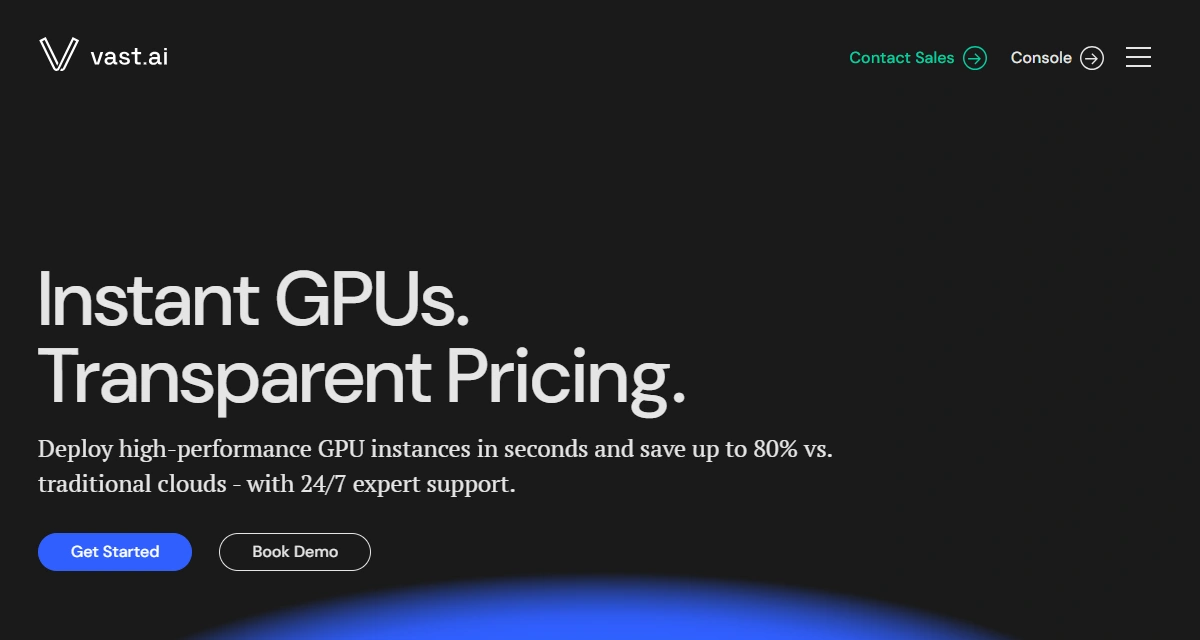
Vast.ai runs a marketplace where independent hosts set their own rates, which reaches the lowest prices on this list for some cards. A100 80GB listings start from $0.95/hr, the lowest A100 rate here, and consumer cards like the RTX 4090 start near $0.40/hr, while H100 listings start higher at $4.14/hr. You choose the host, the specs, and the reliability tier.
Vast.ai's trade is consistency and hands-on management, since hardware quality and support vary by host. It fits price-first teams with flexible timing who compare listings and check host ratings before renting.
Nebius
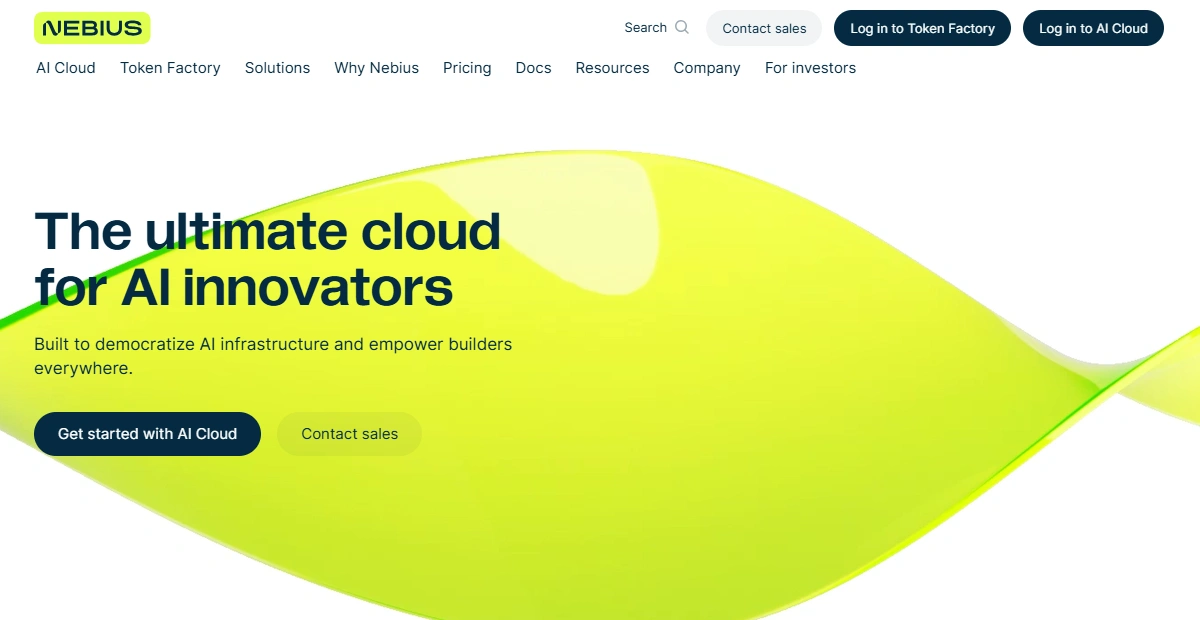
Nebius is a full cloud platform with strength in European regions, offering VMs, containers, and Kubernetes alongside GPUs. An on-demand H100 is $3.85/hr, and the current lineup centers on newer cards like the H200 and Blackwell rather than the A100, which Nebius no longer lists. Storage and networking come as part of one platform rather than GPU rental alone.
Nebius fits teams that need low-latency access in Europe or geographic redundancy across regions. It is closer to a traditional cloud than a bare-metal specialist, which helps if you want managed services around the compute.
Crusoe
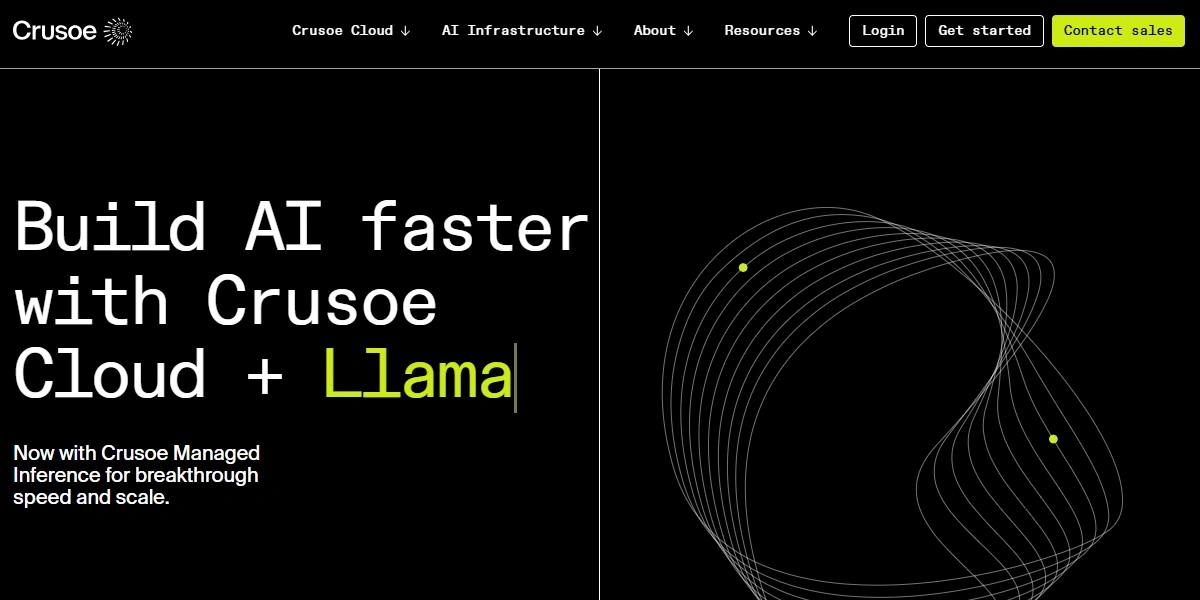
Crusoe is the neocloud closest to CoreWeave's positioning, but it publishes most of its rate card and sells single GPUs on demand. H100 is $3.90/GPU-hr and the A100 80GB is $2.00/hr, billed by the minute with no charge for ingress or egress. B200 and GB200 capacity exists but is quote-based.
Crusoe suits teams that want a serious neocloud with published on-demand rates and no data-transfer fees, without CoreWeave's 8-GPU minimum. Its reserved pricing is negotiated rather than posted, so the on-demand rate is the honest comparison point.
Modal
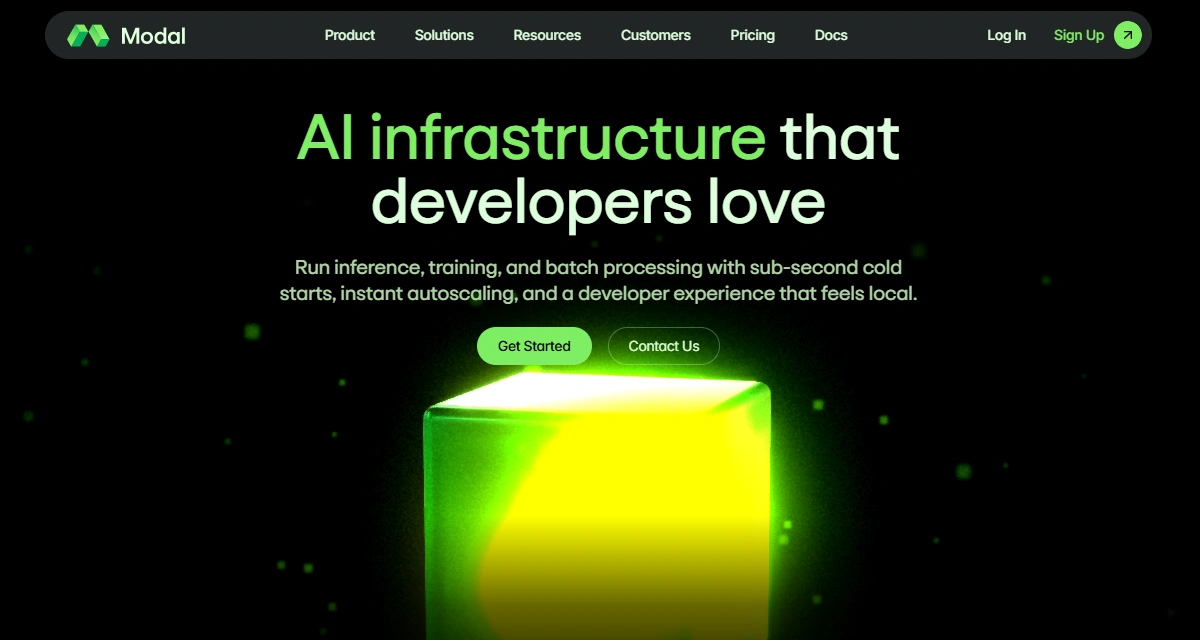
Modal is a serverless platform that bills per second and stops the meter the instant your function scales to zero. Its H100 rate is $3.95/hr at full utilization, but the advantage is paying nothing while idle. Modal is Python-first, with GPU functions and inference endpoints rather than persistent instances.
Modal is a different shape from a rented instance, so it wins on bursty inference where a pod would sit idle between requests. For steady, long-running jobs, a flat hourly rate on another provider is usually cheaper.
When A Hyperscaler Makes Sense For Cloud Computing
The hyperscalers sit in a different tier and rarely win on price, but they are worth naming. AWS runs $6.88/GPU-hr for an H100 and Azure starts at $6.98/hr, while Google Cloud at $10.98/hr and Oracle at $10.00/hr sit higher on their 8-GPU nodes.
Choose a hyperscaler when GPU compute is one line in a much larger cloud footprint, when you need specific compliance certifications, or when you are already committed to that ecosystem. For a team whose main goal is cheap, flexible GPU access, the specialized providers above are the better value, the same reason those teams left CoreWeave.
Why Thunder Compute Is A Developer-Friendly CoreWeave Alternative
Thunder Compute answers CoreWeave's two biggest friction points: it rents a single GPU, and it starts quickly without a sales call. Where CoreWeave asks for an 8-GPU node and a contract for its best pricing, Thunder Compute gives you a single A100 at $1.09/hr or an H100 at $3.20/hr, all-in and billed by the minute with no commitment.
Single-GPU Access With All-In, Per-Minute Billing
The rate you see is the rate you pay, because Thunder Compute does not split the bill into separate GPU, CPU, RAM, and storage charges. Per-minute billing means a 5-minute job costs 5 minutes, not a rounded-up hour, which matters for bursty, iterative development. Persistent storage is included, so your environment can survive between sessions.
Launch A GPU From VS Code Or Cursor In Under A Minute
Thunder Compute integrates with VS Code and Cursor, so you attach a cloud GPU to your existing editor instead of SSHing into a raw box. One-click templates for local LLMs and image generation get common stacks running without setup. For a developer replacing CoreWeave, the difference is going from a procurement cycle to a running GPU in minutes.
How To Migrate Off CoreWeave
Moving off CoreWeave is straightforward for most workloads, especially containerized ones. If you already run containers on CoreWeave's Kubernetes, your images are portable: export the manifests, adjust the registry if needed, and deploy on any provider that accepts standard Docker images.
For direct VM workloads, export your scripts and configuration, then install your stack on a fresh instance with SSH access. Plan the data transfer in advance, since moving large datasets takes time and is easier within one provider's network. A sensible path is a small pilot on your chosen alternative, then a full migration once performance and cost hold up.
See a detailed breakdown of CoreWeave pricing and where it fits.
Last Thoughts on CoreWeave Alternatives
CoreWeave remains a strong choice for large-scale enterprise training where 8-GPU nodes and negotiated contracts are normal. For everyone else, the reason to switch is the unit size and the sales cycle, not the per-GPU price. If your workload fits on one or a few GPUs, Thunder Compute is the most direct replacement, with the lowest fixed on-demand A100 rate at $1.09/hr, per-minute billing, and no contract.
Frequently Asked Questions
What Are Some Alternatives To CoreWeave For Cloud Computing?
The strongest self-serve alternatives to CoreWeave for GPU cloud computing are Thunder Compute, RunPod, Lambda, Vast.ai, Nebius, Crusoe, and Modal. They all rent single GPUs with no 8-GPU minimum, and most bill by the minute or second with no long-term contract. The hyperscalers (AWS, Azure, Google Cloud, and Oracle) are alternatives too, but they compete in a higher-priced tier.
What Is The Cheapest CoreWeave Alternative?
It depends on the card. For an A100 80GB, Thunder Compute has the lowest fixed on-demand rate in this guide at $1.09/hr, billed per minute. For an H100, on-demand rates across the specialists cluster between $3.20/hr and $3.95/hr, and marketplaces like Vast.ai can go lower for interruptible workloads at the cost of consistency.
Are There CoreWeave Alternatives In The United States?
Yes. Thunder Compute, RunPod, Lambda, Crusoe, and the hyperscalers all operate United States data centers, so you can run workloads close to US users with domestic data residency. Nebius adds strong European coverage for geographic redundancy, and Vast.ai spans many regions through its marketplace. Check each provider's region list for the specific location and GPU you need.
Do These CoreWeave Alternatives Require Long-Term Contracts?
No. The providers in this guide offer standard rates on a pay-as-you-go basis with no minimum term, unlike CoreWeave's best pricing, which is gated behind multi-year reserved contracts. Reserved discounts are available from several of them as an option, not a requirement. You pay only for the time you use.
How Do You Migrate Off CoreWeave?
Containerized workloads are the easiest to move: export your Kubernetes manifests, adjust the image registry, and redeploy on any provider that accepts standard Docker images. For direct VM workloads, move your scripts and data, then install your stack on a fresh instance with SSH access. Run a small pilot before shifting production.