Runpod's on-demand A100 80GB lists at $1.79/hr and H100 PCIe at $3.99/hr. That is fine for short jobs, but costs climb fast on multi-hour training runs or live inference traffic. Several alternatives undercut Runpod on price, improve reliability, or add capabilities Runpod lacks.
This post covers ten Runpod alternatives compared on GPU pricing, developer experience, and workload fit.
Read nextFor a detailed Runpod vs Thunder Compute breakdown including storage, serverless, and billing math, see the full comparison.
Takeaways
- No SLA on Community Cloud: Runpod's low-cost tier runs on third-party hosts with no uptime warranty.
- Storage included: Thunder Compute bundles 100GB per GPU free; Runpod bills network volumes at $0.07/GB/month.
- Serverless inference: Modal and Baseten replace Runpod Serverless for variable-traffic workloads.
- Cheapest marketplace: Vast.ai's A100 80GB median is $1.45/hr, but host reliability varies.
- Cheapest managed A100: Thunder Compute lists A100 80GB at $1.09/hr, undercutting Runpod's $1.79/hr on-demand rate.
Why Teams Look for Runpod Alternatives
Runpod remains a flexible, affordable GPU cloud, spanning operated data centers (Secure Cloud) and a third-party marketplace (Community Cloud). Those constraints still push some workloads elsewhere. However, teams evaluate Runpod alternatives for three reasons:
Community Cloud reliability. Runpod's low-cost Community Cloud offers no uptime guarantee. It draws from a distributed network of independent GPU hosts, and Runpod's terms of service make "no warranty that the Community Cloud Offerings will meet your requirements or be available on an uninterrupted, error-free basis". For production inference APIs or long training runs, that is a real risk.
No native IDE integration. Runpod offers SSH, Jupyter, and a web terminal through Pods, but no built-in extensions for any popular editor. Runpod's MCP (Model Context Protocol) server lets MCP-compatible editors manage Pods and endpoints with natural-language commands. Even so, the dev connection is still SSH, Jupyter, or the web terminal.
EU presence has improved, with caveats. Runpod now offers dedicated EU data center regions and has achieved independently audited GDPR compliance, including data residency guarantees and a standard DPA (data processing agreement). But Runpod is US-headquartered, so it remains subject to the US CLOUD Act. That law grants US authorities potential access to data even when it is stored on EU soil.
Quick Comparison: L40, A100, H100, and B200 Pricing
Rates below are on-demand list prices in $/GPU-hr. For the full A100 80GB and 40GB price spectrum across every major provider, see our A100 pricing guide, updated weekly.
| Provider | L40 ($/hr) | A100 80GB ($/hr) | H100 80GB ($/hr) | B200 ($/hr) | Best For |
|---|---|---|---|---|---|
| Thunder Compute | $0.79 | $1.09 | $3.20 | N/A | Low A100 price, managed H100 availability, IDE-first workflow |
| Hyperstack | $1.00 | $1.35 | $2.50 | $6.00 | Enterprise performance, EU availability |
| Vast.ai 1 | N/A | $1.45 | $10.84 | $6.28 | Marketplace pricing, checkpoint-friendly jobs |
| Google Colab | N/A | ~$1.50 2 | N/A | N/A | Interactive notebooks, education |
| Crusoe Cloud | N/A | $2.00 | $4.50 | N/A | Managed infrastructure, sustainability focus |
| Vultr | N/A | $2.40 | $2.99 | $8.50 | Global cloud ecosystem, 32+ regions |
| CoreWeave3 | ~$1.25 | ~$2.70 | ~$6.16 | ~$8.60 | InfiniBand clusters, enterprise training |
| Lambda | N/A | $2.79 | $3.29 | $6.69 | Managed ML environment, research labs |
| Paperspace | N/A | $3.18 | $5.95 | N/A | Jupyter notebooks, polished UX |
| Azure | N/A | $3.67 | $6.98 | N/A | Enterprise compliance benchmark |
| 1 Vast.ai pricing varies by host and is represented as the latest recorded median for current US/CA listings. 2 Google Colab uses Compute Units (~13-15 CUs/hr for A100 at $9.99/100 CUs). 3 CoreWeave pricing normalized from public 8-GPU node rates. Last reviewed on October 16, 2026. | |||||
NoteOn-demand vs spot: Every rate in the table is an on-demand list price. Most of these providers also sell spot or interruptible capacity that cuts costs by around 60%, but those instances can be reclaimed with little warning. Spot suits checkpoint-friendly batch jobs; on-demand is safer for production inference or long, uninterrupted training runs.
1. Thunder Compute
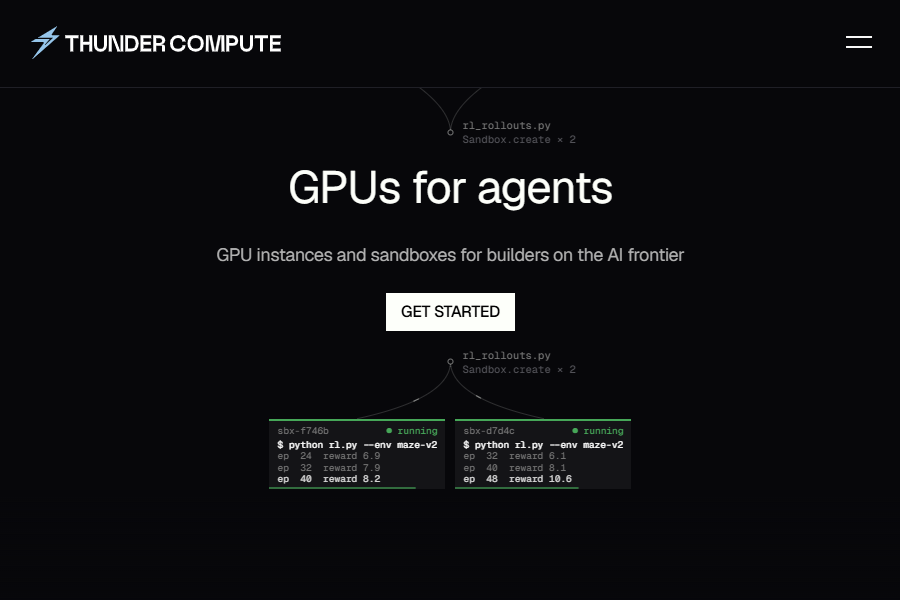
A100 80GB runs $1.09/hr and H100 PCIe runs $3.20/hr, both on-demand, billed per minute, and with no egress fees. The A100 80GB covers most fine-tuning and mid-size inference; for full specs, benchmarks, and PCIe vs SXM guidance, see our NVIDIA A100 guide.
Every instance includes 100GB per GPU at no extra charge. Your home directory and installed packages survive restarts without any configuration. Snapshots for long-term storage cost $0.05/GB/month and let you save your full environment state before switching GPU configurations.
One-click extensions for VS Code, Cursor, and Devin Desktop connect directly to a running instance. Instances can be created using the CLI, web console, MCP server, and REST API. US university students get $20 in free credit on signup with a .edu email, usable on A6000 and L40 GPUs.
Account hoops: Email signup and credit card. No wait-list.
Best for: Solo researchers, startups, and ML engineers who want low managed A100 pricing, available H100 capacity, IDE-first development, and persistent storage included.
2. Vast.ai
Vast.ai is a peer-to-peer marketplace where independent GPU hosts list spare capacity. The latest recorded A100 80GB median is $1.45/hr across 4 current US listings; the H100 median is $10.84/hr. The A100 rate can suit teams willing to manage the marketplace trade-offs.
Host quality varies widely. Filtering for high uptime scores, verified hardware, and long platform tenure reduces risk, but a marketplace never matches managed-infrastructure consistency. Nodes can disappear mid-run with minimal notice.
Account hoops: None. Test a small workload before committing to long runs.
Best for: Budget-conscious researchers running non-critical, checkpoint-friendly training jobs.
3. Hyperstack
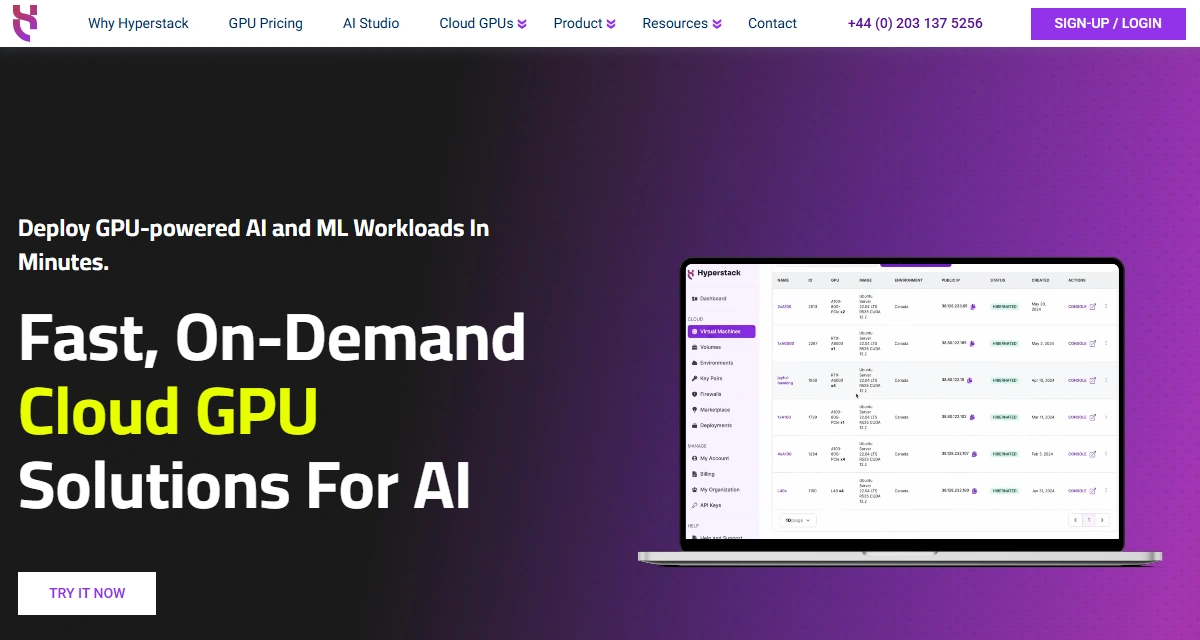
Hyperstack is a managed GPU cloud focused on enterprise performance and European availability. A100 80GB starts at $1.35/hr and H100 PCIe on-demand at $2.50/hr, with spot VM options for additional savings and an AI Studio for one-click model deployment.
The platform emphasizes sustainable infrastructure and offers on-demand Kubernetes alongside standard GPU instances.
Account hoops: Fast self-service signup. No enterprise contracts required for on-demand access.
Best for: Developers who need reliable, EU-available GPU infrastructure and sustainable compute.
4. Google Colab
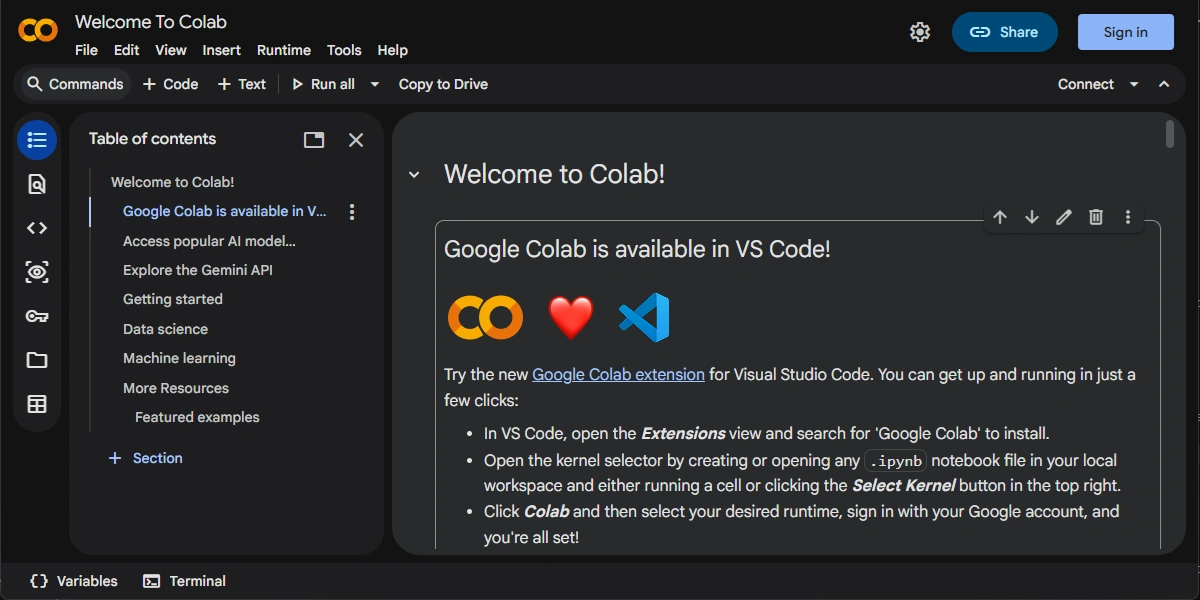
Google Colab is a browser-based notebook environment with a free tier and GPU access through a Compute Unit (CU) pricing model. A100 80GB sessions cost roughly $1.30-$1.50/hr equivalent (around 13-15 CUs/hr at $9.99/100 CUs), though pricing varies by session type and plan tier.
Colab's trade-offs: 12-hour session caps, 90-minute automated idle timeouts, and no persistent instance between sessions. It works best for rapid development, interactive research, and education, not sustained training runs.
Account hoops: Google account required. Pro and Pro+ plans available for longer sessions.
Best for: Interactive development, education, and quick experiments that don't require persistent storage.
Read nextFor a full comparison, read Runpod vs Google Colab Pro.
5. Lambda
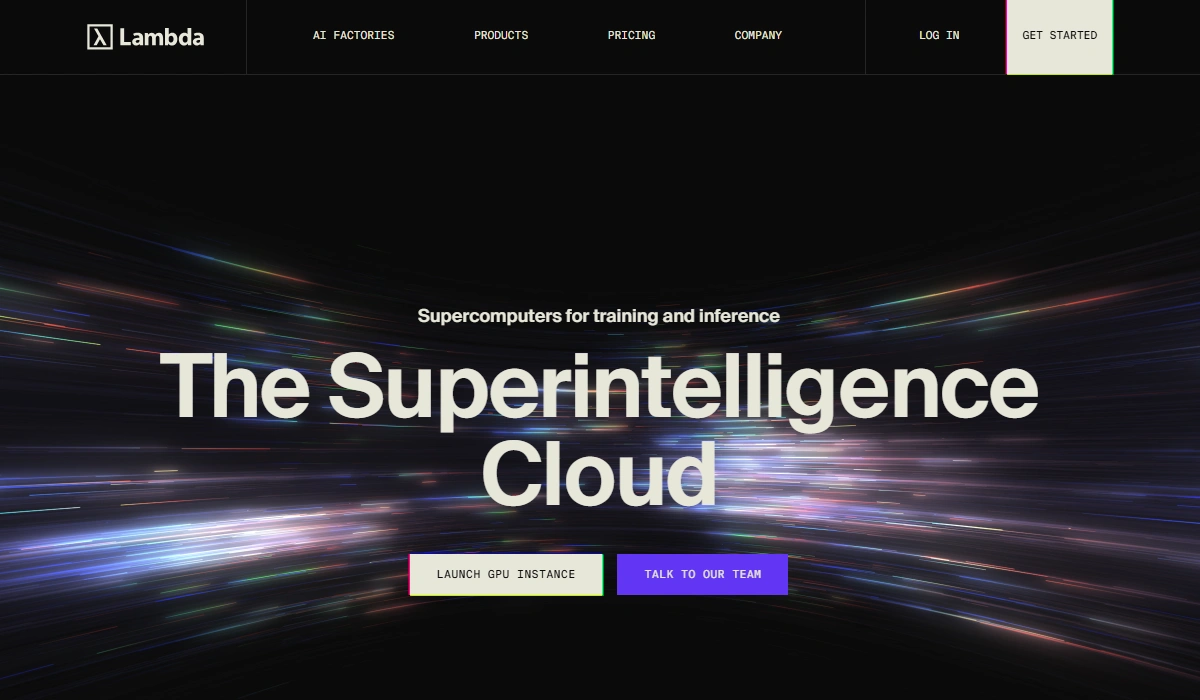
Lambda is one of the most established managed GPU clouds, with Lambda Stack shipping Ubuntu, PyTorch, TensorFlow, CUDA, and cuDNN pre-configured. A100 80GB on-demand runs $2.79/hr and H100 PCIe at $3.29/hr.
Lambda's main limitation is availability: H100 inventory sells out during peak demand, and A100 and H100 SXM instances are only available as 8x nodes. There is no single-GPU A100 SXM option.
Account hoops: Instant signup; occasional wait-lists during demand spikes.
Best for: Research labs and teams that want a polished, pre-configured ML environment and are comfortable with Lambda's pricing.
6. Crusoe Cloud
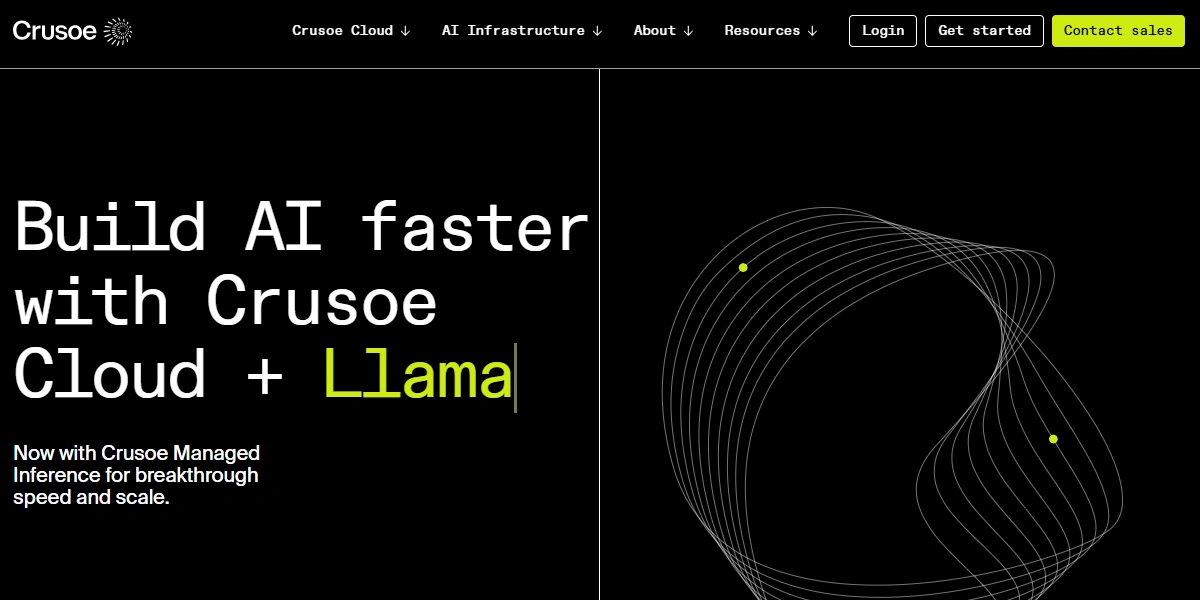
Crusoe is a managed alternative to Lambda with public pricing. A100 80GB starts at $2.00/hr and H100 at $4.50/hr. Crusoe's infrastructure began around stranded-natural-gas capture and has expanded into grid-connected facilities with a broader energy mix. Spot instances are available for checkpoint-friendly workloads.
Account hoops: Join a short wait-list if inventory is tight.
Best for: Production workloads where uptime and sustainability reporting matter more than the lowest price.
7. CoreWeave
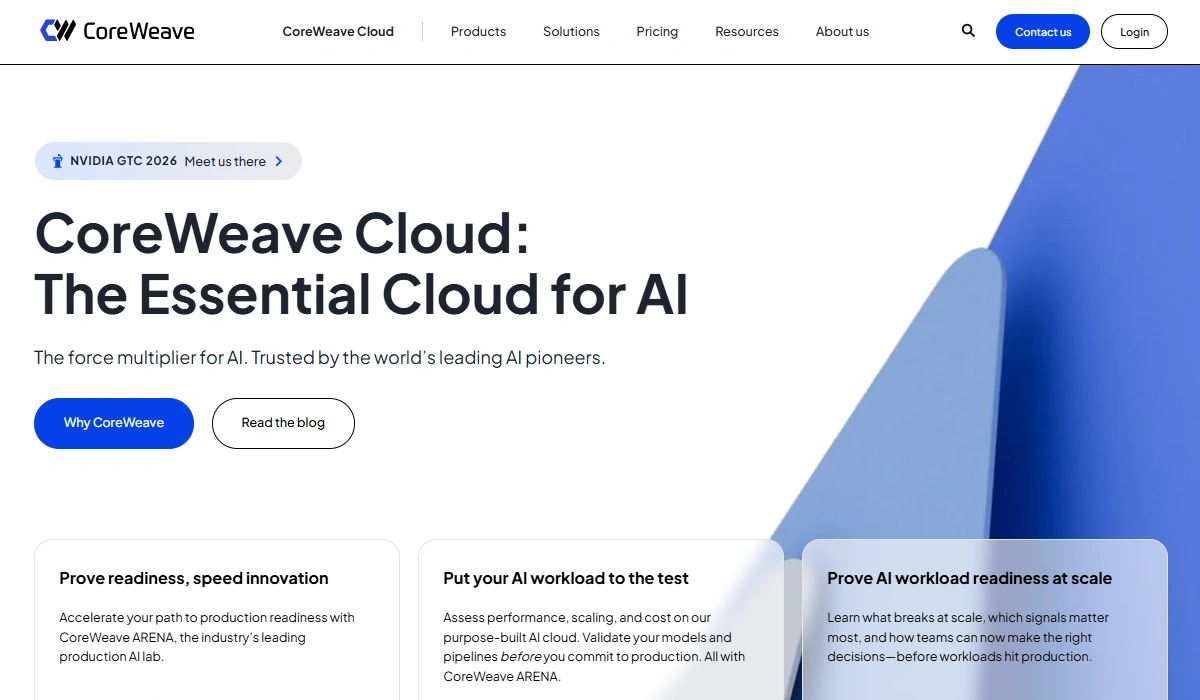
CoreWeave is purpose-built for large-scale training and inference, with InfiniBand networking between nodes and Kubernetes-native infrastructure. A100 80GB runs around $2.70/hr normalized from public 8-GPU node pricing; H100 on-demand is approximately $6.16/hr.
For teams running distributed training on 16+ GPUs where interconnect bandwidth materially affects throughput, CoreWeave is one of the few providers that can deliver. The trade-off is accessibility: access approval takes a few business days and most large-cluster configurations require contracts.
Account hoops: Access approval required; can take a few business days.
Best for: Teams running large multi-GPU distributed training jobs that need InfiniBand and enterprise SLAs.
8. Vultr
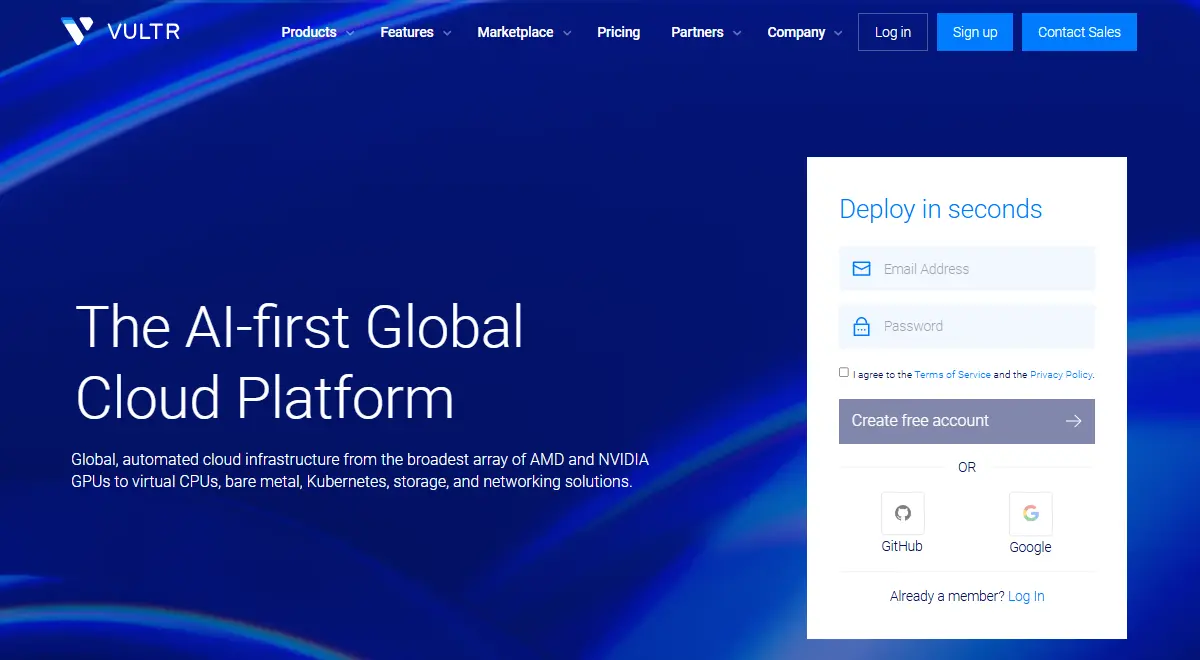
Vultr provides GPU instances across 32+ global locations with a consistent, virtualized environment. A100 80GB Cloud GPU instances run $2.40/hr, while H100 80GB instances cost $2.99/hr. Vultr sits between specialist GPU clouds and the big hyperscalers, with managed Kubernetes and S3-compatible object storage alongside GPU compute.
Account hoops: Standard cloud signup; may require identity verification for new accounts.
Best for: Teams that need GPU access alongside other cloud infrastructure in a single provider.
9. Paperspace

Paperspace, now part of DigitalOcean, offers strong Jupyter integration and a polished UI suited to teams new to GPU cloud. A100 80GB on-demand runs $3.18/hr and H100 at $5.95/hr. The Gradient platform and pre-configured ML environments reduce setup friction, but the per-GPU cost is the highest on this list outside of Azure.
Account hoops: Credit card signup; fraud checks are stricter than some competitors.
Best for: Users who want a polished UI and do not mind paying a small premium.
10. Azure
Azure is included as an enterprise benchmark, not a practical recommendation for most GPU compute workloads. GPU instances run $3.67/hr for A100 configurations and $6.98/hr for H100 configurations. Azure offers deep Microsoft ecosystem integration, enterprise compliance certifications, and global availability, but at prices that are hard to justify against specialist providers.
Account hoops: Complex subscription tiers and quota requests.
Best for: Organizations already heavily invested in the Microsoft ecosystem that need GPU access within existing Azure infrastructure.
Serverless GPU Alternatives
Teams looking to replace Runpod Serverless specifically should also evaluate Modal and Baseten. Both are purpose-built for serverless GPU inference and offer better developer experience than Runpod Serverless for variable-traffic workloads.
Modal is a Python-native platform where you decorate functions with GPU requirements and Modal handles scaling, containers, and billing. Modal charges per second of active compute with automatic scale-to-zero, roughly $2.50/hr for A100 and $3.95/hr for H100 converted to hourly.
Baseten targets production model serving APIs with managed vLLM and TensorRT integration. Neither is suited for sustained training jobs, but both are stronger choices than Runpod Serverless for inference workloads.
How to Choose
- Low managed A100 pricing and available H100 capacity: Thunder Compute. A100 at $1.09/hr, H100 at $3.20/hr, persistent storage included.
- Low-cost marketplace option, non-critical workloads: Vast.ai. Marketplace pricing with trade-offs in host reliability.
- Serverless inference that scales to zero: Modal or Baseten.
- Enterprise performance with EU availability: Hyperstack. On-demand A100 at $1.35/hr and H100 PCIe at $2.50/hr.
- Large multi-node distributed training: CoreWeave or Lambda. InfiniBand interconnect, enterprise SLAs.
- EU data residency: Nebius or Crusoe. Both offer infrastructure outside US-only regions.
- Jupyter-first, new to GPU cloud: Paperspace. Highest per-GPU cost but lowest setup friction.
- Global cloud ecosystem alongside GPUs: Vultr. 32+ regions, managed Kubernetes, S3 storage.
Last Thoughts on Runpod Alternatives
Runpod is a solid starting point, but the GPU cloud market offers strong alternatives on price, reliability, and workflow. For most AI training and development, Thunder Compute is the simplest path: managed infrastructure, 100GB storage included per GPU, one-click IDE integration, A100 80GB at $1.09/hr, and available H100 capacity.
What is the cheapest Runpod alternative for A100 GPUs?
Thunder Compute at $1.09/hr for A100 80GB is among the lowest managed rates tracked, versus Runpod at $1.79/hr. Vast.ai's latest recorded A100 80GB median is $1.45/hr from 4 current US listings, with trade-offs in availability, host reliability, and variable bandwidth fees.
Is Vast.ai reliable for GPU compute?
Vast.ai offers the lowest marketplace prices, but host reliability varies. Nodes may disappear mid-run. Best for checkpoint-friendly batch jobs, not production inference or long uninterrupted training.
Which Runpod alternatives have the best GPU availability?
Thunder Compute and Lambda maintain strong A100 and H100 inventory for on-demand single-node access. CoreWeave has large cluster availability but requires contracts.
Do I need to join a waitlist for Runpod alternatives?
Thunder Compute, Vast.ai, and Paperspace offer instant access with email and credit card. Lambda occasionally shows out-of-stock. CoreWeave requires access approval that can take a few business days.
Which Runpod alternative is best for EU data residency?
Nebius operates data centers in Europe with GDPR compliance. Crusoe also operates outside US-only data centers. Both are better positioned than Runpod for European data residency requirements.
How does Thunder Compute compare to Runpod on storage costs?
Thunder Compute includes 100GB per GPU at no extra charge. Runpod charges $0.07/GB/month for network volumes. For 500GB of storage, Runpod adds $35/month before any compute.
Can I use Runpod Docker images on Thunder Compute?
Yes, in most cases. Runpod and Thunder Compute both run standard container images, so Docker workloads port directly. Thunder Compute supports standard SSH and CUDA environments; RunPod's Serverless handler format is the main RunPod-specific piece to rework.
Is Runpod's Community Cloud reliable?
No, not for production. Runpod's Community Cloud runs on third-party hosts, and its terms guarantee no uninterrupted, error-free availability. It fits cost-sensitive, checkpoint-friendly jobs; use Secure Cloud or a managed provider like Thunder Compute for production inference or long training runs.